

How the Canadian Association of Recycling Industries Works to Support and Grow its Membership
The Canadian Association of Recycling Industries (CARI) represents hundreds of member companies in the recycling sector. Like ReMA, CARI members process, broker, and consume commodities, including ferrous and nonferrous metals, electronics, paper, rubber, glass, textiles, and plastics.
Founded in 1941 when the Canadian government sought high-quality recycled metal to support the war effort, CARI has evolved into a powerful industry association with a membership that ranges from family-owned recycling yards to huge capital-intensive processing plants. Most of its members deal primarily or exclusively in metals. Every CARI activity aims to improve the economic position of member companies and promote the recycled materials industry.
ReMA News spoke with Jacqueline Lotzkar, CARI’s president and CEO, and Jonathan Ross, CARI’s Secretary/Treasurer about the history of the association, what they’re looking to accomplish in their roles, and areas for collaboration between CARI and ReMA.
Tell me about the history of CARI.
Jacqueline Lotzkar: CARI was founded back in 1941 during World War II, when recyclers from across Canada came together in Ottawa to advocate for the use of recycled materials to support the war effort. That’s really how it all started; recyclers joining forces to make a difference and advance the use of recycled materials.
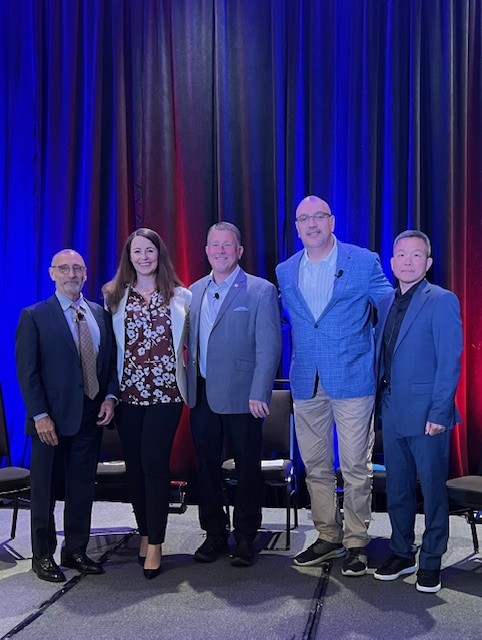
Since then, we’ve grown. Today, we continue to advocate for the recycled materials industry in Canada, provide education and resources for our members, and host networking events across the country. While we still have many of the same founding metals businesses involved, our membership now spans all materials—metals, plastics, paper and cardboard, and electronics. Like ReMA, we’ve really evolved beyond metals to represent the full recycled materials industry.
Jonathan Ross: CARI has traditionally preferred to work quietly and under the radar. However, in today’s environment—where legislation and international treaties increasingly impact our industry and its members—it’s essential that we become more vocal.
Both government and the public know very little about what our industry does and the contributions we make to the Canadian economy. By educating these groups, CARI will be better positioned to share our message and shift negative perceptions toward a more positive understanding of our industry.
What do you want to accomplish in your role?
Jacqueline: My first day of work with CARI was February 3, 2025, and that happened to be the same day President Trump announced tariffs on aluminum and steel. So right from day one, trade advocacy became a major focus.
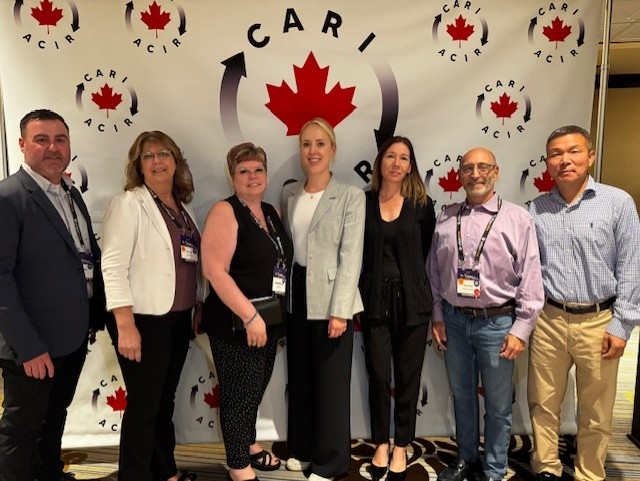
Since then, one of my goals has been focused on engaging our members and making sure they have a strong voice in shaping CARI’s direction. I’m a big believer that associations should be member-led, so we’ve set up a few committees; Advocacy & Policy, Communications & Events, and Membership to give members more ways to get involved.
I have also been putting a lot of energy into our events. Our convention this year in Winnipeg was our most successful in many years: great attendance and great energy. Next year’s convention will be June 8–10, 2026, in Gatineau, Quebec, and we’re already looking forward to building on this year’s success.
Beyond that, we’ve had some really fun networking events like our summer outing at a Toronto Blue Jays game and our recent annual Consumers’ Night earlier this month.
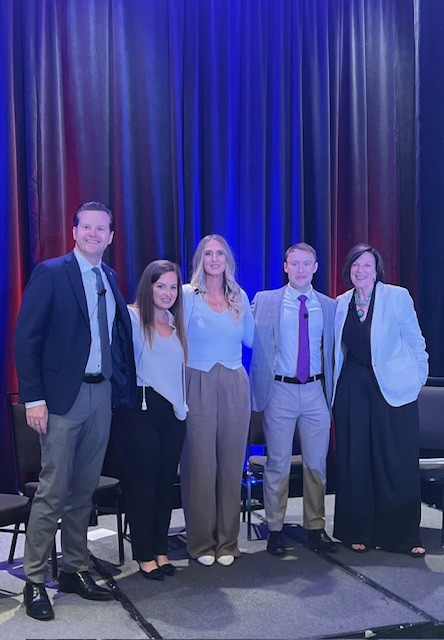
I am also working to grow CARI’s visibility beyond Canada. We’re seeing more interest from recyclers in the U.S. and overseas who want to attend our events and connect with Canadian recyclers in Canada. And we’ve launched two new groups CARI Next Gen, for members 40 and under, and CARI Women in Recycling to encourage community building and to create more learning and leadership opportunities within CARI.
Jonathan: I currently serve on the Executive Committee of CARI, specifically in the role of Secretary-Treasurer. In addition to my executive duties, I also chair the Advocacy Committee.
As the longest-serving member of the current board, I’ve been a strong advocate for CARI to increase its focus on lobbying efforts. Our association is not as widely recognized as many others in Canada, and it’s essential that we proactively engage with parties that could impact our members.
What are the areas of opportunity for CARI and ReMA to collaborate?
Jacqueline: Firstly, I really want to thank ReMA for all the support since I started— Robin Wiener, Colin Kelly, Adam Shaffer, all the ReMA staff and board have been incredibly supportive. With everything happening around trade between the U.S. and Canada, our collaboration has been so important, and I see that continuing to grow.
CARI and ReMA share a lot of members, and our missions are very much aligned. We’ve already started working with some ReMA chapters to cross-promote events and share discounted registration rates, and I think that kind of cooperation benefits everyone. We are very open to more collaborations in the future.

We’re also seeing more U.S. and international recyclers attending our events, which is exciting. I would like to extend an open invitation to ReMA members—come join us! Whether it’s at our upcoming Consumers’ Night or at our convention next June in Gatineau, we’d love to welcome you in Canada, connect you with our members, and keep strengthening the ties between our associations.
Jonathan: There are tremendous synergies between ReMA and CARI. In these uncertain times, marked by trade and tariff challenges, collaboration between our two organizations is more important than ever.
For example, the upcoming negotiations to update our current free trade agreement present an opportunity for ReMA and CARI to work together. Advocating for the exemption of our materials across borders—without exceptions or exclusions—would be a win-win for both Canada and the United States.
Additionally, CARI members benefit from a wide range of programs, online content, and access to equipment manufacturers through traders and chapter events. Allowing both REMA and CARI members to access each other’s programs would further strengthen our mutual working relationship.
What do you enjoy most about being part of CARI?
Jonathan: CARI provides significant value to its membership. It’s important to highlight the differences in legislative rules, bylaws, and regulations between Canada and the United States. CARI focuses specifically on issues affecting Canadians and the legislation that impacts our industry—this is a key distinction between ReMA and CARI.

Having a Canadian association, based in Canada and representing Canadian members, lends credibility when engaging with stakeholders. I’ve personally been involved in situations where our industry was targeted by proposed legislation. In those cases, CARI’s ability to present before government bodies played a crucial role in having that legislation amended.
Their involvement provided professional representation and helped government agencies better understand our industry. While there are many synergies between ReMA and CARI, there are also important differences. Maintaining an independent Canadian association is essential to effectively represent the interests of our members in the recycling industry.
Images courtesy of CARI.