
Industrial Fire Prevention and Protection Systems for Recyclers: Tim Barry with STEINERT
Battery fires have become a growing concern across the recycled materials industry. Fortunately, a range of industrial fire prevention and protection systems, both high-tech and traditional, are available to help recyclers mitigate this risk.
ReMA has conducted an in-depth review of various fire prevention and protection systems offered by different companies and will highlight each in a multi-part ReMA News series.
This series is for informational purposes only; ReMA does not endorse any specific products or technologies. Companies should evaluate their individual needs to determine which solution best suits their operations.
STEINERT, a provider of advanced separation technologies for the recycling and mining industries, offers battery recovery and sorting solutions designed to help materials recovery facilities (MRFs) reduce fire risks. ReMA News spoke with Tim Barry, Market Manager – Waste at STEINERT, to discuss the challenges batteries pose to recyclers, the company’s technological solutions, and where the industry may be headed.
The Problem of Batteries in Recycling
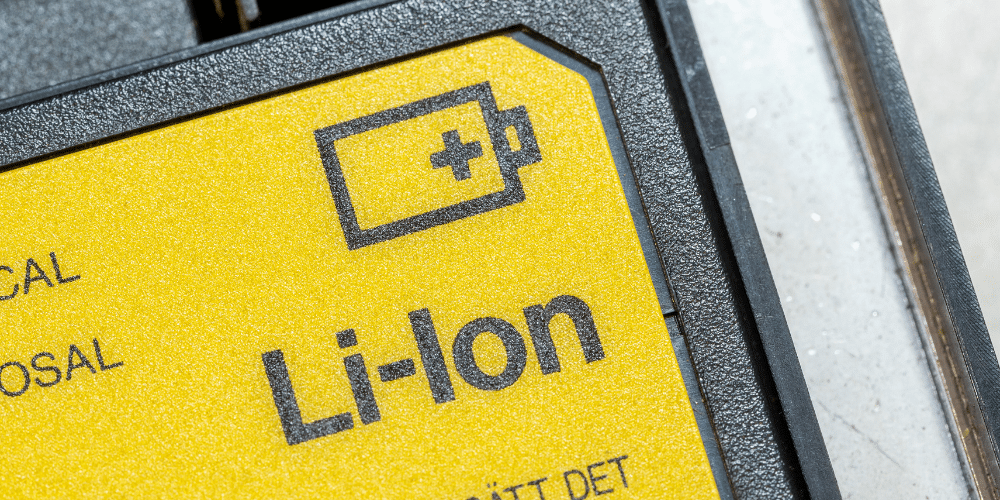
We live in a society where cordless convenience is the norm. Today’s preferred power source—lithium-ion batteries—is efficient and convenient, but if mishandled, these batteries can become dangerous.
Lithium-ion batteries can heat up rapidly, creating a serious fire risk. Once ignited, these batteries burn at extremely high temperatures, and the surrounding materials in the waste stream provide ample fuel for the fire to spread quickly. This combination allows battery fires to escalate almost instantly, making them especially dangerous in recycling environments.
STEINERT’s Technological Solution
Although there is no “simple solution” to solve this issue, STEINERT is actively working to help recyclers identify and remove batteries before they cause harm. Efficient battery sorting requires multiple technologies. STEINERT is the only provider offering magnetic and sensor-based sorting solutions from a single source, ensuring seamless integration and high sorting accuracy.
STEINERT’s x-ray sorting technology enables operators to see inside the material stream as it moves along the conveyor belt, allowing them to detect the presence of batteries—even when the material layer is not perfectly spread out. The system is designed to handle a certain amount of burden depth while still maintaining reliable detection accuracy.
Once a battery is identified, STEINERT’s air ejection system, originally developed for the scrap recycling and mining sectors, removes it from the stream. While some may associate air ejection systems with lighter materials such as plastics or paper, STEINERT’s version is engineered with enhanced durability and power, enabling it to handle even heavy materials—including batteries—with precision and strength.
The Elusive “Simple Solution”
When addressing the risks recycling facilities face from batteries in the waste stream, there are two primary approaches.
The first approach focuses on preventing batteries from entering facilities in the first place. Some companies are experimenting with x-ray systems that could be installed at the scale houses to detect batteries in the truck before unloading. However, this method presents challenges—since batteries are so common, nearly every truck would likely be flagged, making the process inefficient. Others are developing curbside-level detection technologies that use cameras mounted on trucks to try to see inside bins. While this can work, detecting batteries that are buried under other materials or that are imbedded in products remains difficult.
The second approach involves removing batteries once they reach recycling facilities. Companies like STEINERT are leveraging advanced technology to identify, sort, and remove batteries effectively. The main challenge with this method lies in finding sufficient space to integrate the systems within existing facilities.
Ultimately, recyclers must determine whether to invest in collection-side detection or in-facility removal systems based on their specific operations and goals.
Looking Ahead
A comprehensive solution will likely involve a combination of public education, regulatory compliance, and multiple layers of technology. For example, incorporating detection systems on collection trucks for curbside bins can help reduce the number of batteries entering recycling facilities, while in-facility technologies can identify, and remove any that remain or sneak through in the waste stream. This integrated approach may offer the most practical and effective path forward.
Preventing even a single battery fire that could destroy a facility makes the investment worthwhile. However, it can be difficult for operators to justify spending on “what-if” scenarios. It’s a challenge that keeps many in the industry up at night, but STEINERT—and others in the industry—are committed to developing solutions that help recyclers operate more safely and with greater peace of mind.