

Beyond the Yard
Conversations Shaping the Future of Recycled Materials
The future of the recycled materials industry will be shaped by leaders who can navigate change, drive innovation, and bring new perspectives to a rapidly evolving landscape. Beyond the Yard is a thought-leadership series from the ReMA Young Executives (ReMAYE) Council featuring conversations with emerging industry leaders on leadership, business growth, industry challenges, and the future of recycled materials.
Get to know ReMAYE Co-Chair Abhijay Goenka.
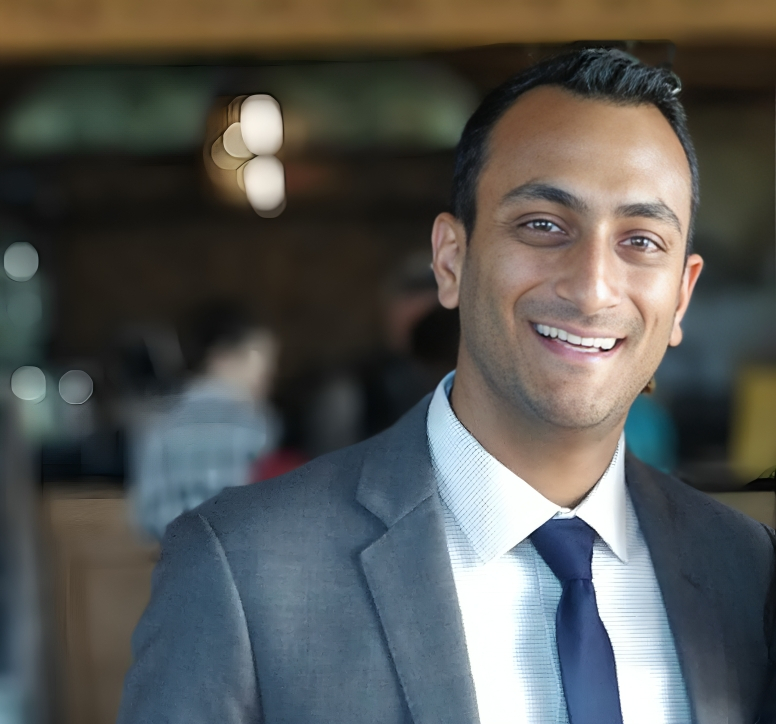
1. What’s your current role, and how did you get started in the recycled materials industry?
I’m Vice President of Steelbro International. I touch nearly every part of the business including international trade, business development, finance, operations, technology, and helping shape the company’s long-term strategy.
Like many second-generation leaders, I grew up around the family business. From an early age my father brought me on visits and talked me through how it all worked. But joining the business was always presented as a choice and not an obligation. My education and early career were in finance and management consulting before I ultimately joined the recycling business.
My first opportunity to make a lasting contribution to Steelbro actually came in college. I did a deep dive into our workflows and built out the IT infrastructure the company still runs on today. When I did join full-time, I did so through a role spearheading our expansion into Europe. It was a market where we were less established which gave me breathing room to create value independently rather than relying on the company’s existing relationships.
2. What’s one lesson you learned early in your career that still influences how you operate today?
One lesson that still shapes how I operate today is that this is a relationship business, not a transactional one, and the two are dangerously easy to confuse.
At 25, I was convinced you could win from behind a keyboard. My strategy was simple: send more emails, distribute more price lists, and reach out to anyone whose contact information I could find, regardless of geography or commodity. I thought the best quote and the best written email would win the business, and I treated picking up the phone as an inefficient use of time.
At 35, I realize that was almost exactly backwards. Yes, we make our money one deal at a time, but the relationships behind those deals are what create durable growth. What struck me over time was that the conversations that moved our business forward rarely started with a price quote. They started over coffee at a conference, during a facility visit, or on a phone call where we spent as much time talking about the industry and our lives as we did talking about metal.
Plenty of companies knew Steelbro, and knew my father. Our reputation opened doors. But my own relationships are what kept them open. I didn’t start building real success until I started showing up consistently, at ReMA events, at BYAB, and across the industry, and built a network of people who trusted me directly. Those relationships are what allowed us to grow, and unlike any single transaction, they are what last.
3. What key experiences or decisions have had the biggest impact on your growth so far?
Early on, I made a commitment to say “yes” to almost every opportunity to learn. That meant traveling extensively across the U.S., Europe, and Asia, attending industry conferences, visiting facilities, and spending time with people across every part of the recycled materials value chain with the intention to answer broad questions. How do different markets operate? Why do companies approach the same challenges differently? What can I learn from the way others have built their businesses?
Asking these questions helped Steelbro move quickly to supply aluminum units to Indian manufacturers when conflict disrupted their Middle East supply chain. It also opened the door to help one of our customers move their finished goods into the US market as they expanded their sales.
This industry moves incredibly fast, and a lot of opportunities are only open for a short window. Some of our best strategic decisions have come from conversations with partners around the world who helped us see changing trade flows, policy shifts, or emerging trends before they became obvious. That is what global perspective buys you: the ability to read a market while the picture is still forming. Curiosity never pays off on any single trip, but it compounds overtime until it becomes one of the most durable competitive advantages you can build.
4. What do you see as the biggest opportunity (or challenge) for the next generation in this industry?
The obvious answer is technology, but the challenge hiding inside it is the more interesting story. Everyone is evaluating technology right now, and everyone will point to AI. The thing is AI hands the same information to everyone. When information becomes a commodity, the edge is no longer knowing something first. It is judgment: knowing what the information means and what to do about it. I believe that is earned through experience and relationships.
The real question for our generation is how we adopt all of it, from automated outreach to better market data to smarter sorting and processing, without losing the thing that actually built this industry. Technology should amplify relationships, not replace them. You still have to get on the phone and talk to someone about the business, about golf, about last night’s game, and build the relationship the way people did forty years ago.
5. How would you describe your leadership or working style, and how has it evolved?
If I had to describe my style, it would be disciplined focus, and honestly, I learned most of that discipline from my father. When I first joined, my instinct was to do everything at once. Expand into every region, chase every commodity, double our volume, and layer in as much new technology as I could. My father has always been the counterweight to that instinct. He is methodical. He would rather call one or two people and have a long, genuine conversation than send a hundred emails, and he constantly reminds me that there is no point doubling our volume if it puts our margins, our core suppliers, or our existing markets at risk.
He is never against growth. He pushes for it. But he taught me that growth only counts if you are still honoring the relationships and the markets that got you there. Learning to hold both of those at once, my drive to modernize and expand alongside his discipline about protecting the core, is probably the most important part of how I lead today. A lot of my job is simply knowing which opportunities are genuinely worth the focus they will cost us, and which ones only look good on paper.
6. Where do you think the industry needs to adapt most, and how are you contributing to that change?
The industry needs to get better at protecting its responsible players. I spend most of my time in the international space, and while that is where a lot of the opportunity lives, it also has its gray areas. Not everyone abroad recycles responsibly. Improper operation and misdeclaration sets a bad precedent, damages how our whole industry is perceived, and pushes countries to enact regulations that end up punishing everyone, including the responsible recyclers doing it the right way. Good players should not pay for the actions of a few.
My contribution comes largely through associations such as ReMA and the BIR where we work on these exact issues and set standards for how this business should be conducted. It also comes down to how we run Steelbro day to day. We try to be the counterpart people trust to do things properly, because in this business reputation is the real currency, and it is the one thing you cannot rebuild overnight.
7. Looking ahead, where do you anticipate the greatest pressure for change within the industry?
The greatest pressure is trade policy and where material is allowed to move. Regulations are tightening and fragmenting from one country to the next, and that is reshaping the entire trade. One clear consequence is a push toward doing more domestically, meaning upgrading and processing material like Zorba and old sheet closer to home rather than simply exporting it. For an industry built on moving material across borders, that is a significant shift, and the companies that learn to add value earlier in the chain will be the ones that come out ahead.
The second pressure is generational. A large part of this industry is passing from the people who built it to the next generation, often within family businesses like ours. That handoff forces a hard question. How do you modernize your operations, technology, and strategy without losing the relationships and the reputation that made the business worth inheriting in the first place? That is the balance my generation has to get right.
8. What advice would you give to other young professionals looking to grow in this space?
Keep your perspective broad and build new networks and skills before you need them. This industry is enormous, both geographically and in the range of products and processes, and I am still learning new corners of it all the time. You will often start out responsible for one narrow thing, and it is worth building real depth there. But the people I admire most in this business are the ones who also build breadth. They understand nonferrous, ferrous, electronics, precious metals, batteries, and how the whole value chain connects. It is genuinely impossible to know everything, which is why people call this a lifelong learning industry. Learn about markets before you enter them. Visit facilities that have nothing to do with your day-to-day responsibilities. Treat every conversation as a chance to learn something. That openness is what keeps you flexible and helps you spot opportunities other people miss.
9. Outside of work, what keeps you motivated or grounded?
For me it comes back to family, and to a sense of stewardship. Steelbro is a family business, and part of what drew me in was watching the respect and the relationships my father built over four decades and wanting to carry that forward and eventually add to it.
Becoming a father myself has enhanced that. My daughter is turning one, and it has changed the way I think about what we are building. I am no longer just trying to run a successful company for the next quarter, or even the next decade. I find myself thinking about what kind of business, and what kind of industry we are leaving for the next generation. That means growing Steelbro, but it also means caring about what recycling actually stands for. We are building something greener, and something meant to matter for decades rather than quarters.
10. If you could leave one question for the next Young Executive we interview, what would it be?
What’s one belief you held early in your career that experience has completely changed your mind about?