

Beyond the Yard
Conversations Shaping the Future of Recycled Materials
Leaders who can navigate change, drive innovation and bring new perspectives to a rapidly evolving landscape will shape the future of the recycled materials industry. Beyond the Yard is a thought-leadership series from the ReMA Young Executives (ReMAYE) Council featuring conversations with emerging industry leaders on leadership, business growth, industry challenges and the future of recycled materials.
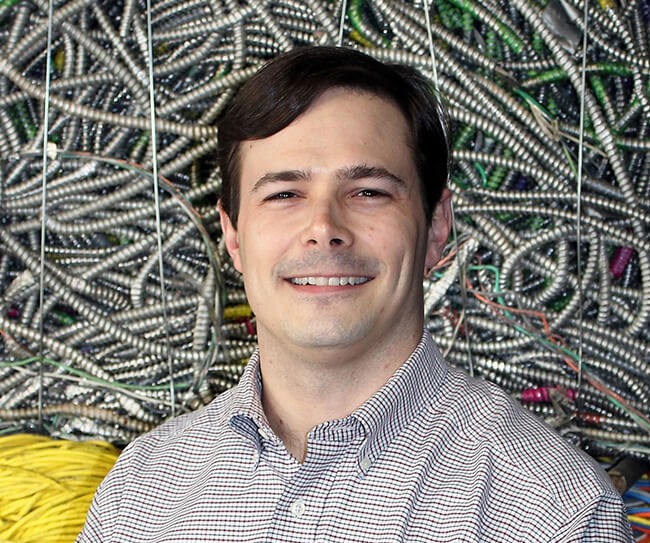
Read on to get to know ReMA Southeast Region Vice President Thomas Bennett.
1. What’s your current role, and how did you get started in the recycled materials industry?
I’m currently the VP of Sales and Marketing for High Tide Metals Inc. I was encouraged to give the industry a try right out of college, but I chickened out driving into the yard! I went into commercial real estate instead. Soon after, the broker I was working for changed companies. I wanted to follow him to the new company, but a non-compete agreement prevented me from doing that. I interviewed with Debbie Fisher at Handsome Properties. Following the interview, Debbie thought I’d be a better fit for High Tide Metals. I received a job offer contingent on an interview with her husband, Neil Fisher, at High Tide Metals. I started working in the warehouse, and the rest is history.
2. What’s one lesson you learned early in your career that still influences how you operate today?I learned how important it is to continually ask questions and to pay attention to everything. You’ll be amazed at the little details that make a big difference.
3. What key experiences or decisions have had the biggest impact on your growth so far?
Getting involved early with South Carolina Recyclers Association (SCRA) and the former ISRI, now ReMA, has had a profound effect on me personally and professionally. Working with people, learning about issues outside the daily norm and being forced to navigate them on my own helped me develop into the person I am today. Serving as SCRA president had the biggest impact because it instilled a sense of ownership. It forced me to think of our members and the industry and act in their best interests by being fiscally accountable and politically vigilant.
4. What do you see as the biggest opportunity (or challenge) for the next generation in this industry?
I think the biggest opportunity is also the biggest challenge: shifting markets due to advances in technology and changes in consumer preferences. I believe we are just now beginning to see some of these changes, and over the next decade, I believe we will be recycling items we could only dream of today. These changes won’t just affect the materials we recycle, but also in the tools and processes available to us. I anticipate AI and other technologies will change how we look at data and process material, at an exponential pace. I’m excited to see where this takes the industry and how to incorporate these advancements at High Tide.
5. How would you describe your leadership or working style, and how has it evolved?
I think my leadership style is continually evolving, and that is my goal. I truly believe a man’s education is never complete until the day he dies. That said, I try to lead by example and steer colleagues’ thoughts in a direction that aligns with shared company goals. I enjoy hearing others’ perspectives and challenging people to think outside of the box and improve the big picture.
6. Where do you think the industry needs to adapt most, and how are you contributing to that change?
This is a hard question to answer. I believe recyclers are some of the most innovative business leaders, and we will always figure out a way to thrive in the dynamic markets we interact with. The issues I see stem more from producers neglecting to plan for end-of-life and from government policies for trade and tariffs. We should be mindful of what we produce and consume to maximize resources and minimize environmental impacts, as well as the significance of free and fair trade to the industry. I try to look at everything with a grain of salt and believe some of the things going on are needed. I just hate the chaos that has resulted.
7. Looking ahead, where do you anticipate the greatest pressure for change within the industry?
I can’t single one out, but several issues concern me: consolidation (we have fewer yards out there, and I miss the friends we’ve lost), corporate lobbying for flow control and government intervention. These all affect the industry in different ways, and we must keep an eye on all of them to navigate for the companies we work for.
8. What advice would you give to other young professionals looking to grow in this space?
ALWAYS ask questions. ALWAYS go on mill tours. Don’t be afraid to step up and stand out, but ALWAYS do it with respect.
9. Outside of work, what keeps you motivated or grounded?
Short answer: I do everything for my family. I also have a great group of coworkers at High Tide and some amazing mentors I’ve found along the way.
Pay It Forward Question from Prior Interview Feature
10. What is one conversation we are not having in this industry that we really should be having?
I’ve really enjoyed the relationships I’ve built with recyclers outside of my commodity realm (nonferrous), particularly the people I’ve met in the plastics industry. Several years ago, when ReMA pushed regionalization—I still think it’s a great idea—part of the ask for the Southeast Region was to include other commodity groups on the board. That was quite a contentious meeting, to say the least! We eventually agreed to add one nonvoting board position for each nonmetal group.
We now have a very active plastics member in the Southeast, and I can honestly say this individual has been a blessing to us. His company truly cares about the recycling industry. I wish we could reignite the conversation about fully integrating other groups, with the goal of bringing their trade associations together and growing our collective voice.
11. If you could leave one question for the next Young Executive we interview, what would it be?
How can ReMA truly improve? And I don’t mean simply making shows more appealing or adding more fluff to fill events. How can we better fulfill our core purpose of being the “voice for recyclers” while making membership more equitable for everyone? If we can answer that, I believe we can strengthen the industry. A stronger, more inclusive organization will grow our membership and, in turn, amplify our collective voice.